
Holding Multiple Worlds: Mental Health in the Iranian Diaspora
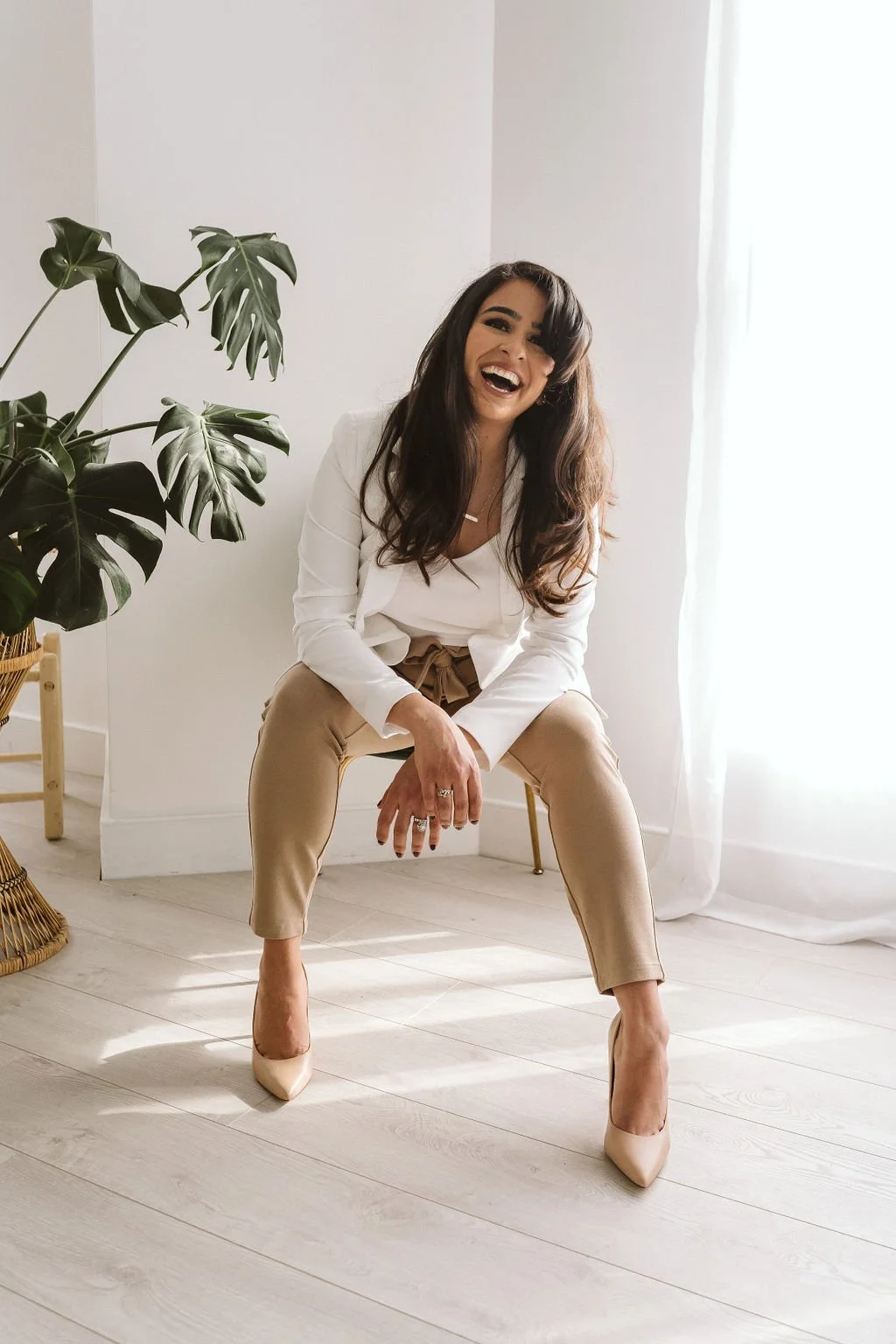
By Dr. Tina Dadgostari, Clinical & Forensic Psychologist
As an Iranian-born psychologist raised in diaspora, I often find myself sitting in the in-between spaces many of my clients know well. My parents left Iran when I was a year old. I grew up with Persian spoken at home and English everywhere else. With one foot in a culture I inherited and another in a culture I was raised within, I learned early that belonging is not always a simple place you arrive at, but something you continuously navigate.
In recent weeks, many in the Iranian community have been holding an additional layer of emotional weight as the war and ongoing political instability continue to unfold. Even for those of us not directly in Iran, the psychological impact is real and complex. It shows up in worry, in grief, in anger, in helplessness, and often in a quiet sense of being stretched between worlds.
The mental health impact of crisis from afar
For many Iranian families in the diaspora, distress is not only shaped by what is happening locally, but by what is happening “over there,” where family, memory, and identity are rooted. Research consistently shows that immigrant communities often experience elevated rates of anxiety, depression, and trauma-related stress, particularly when exposed to ongoing political instability, displacement histories, or threats to loved ones abroad.
In Iranian communities specifically, these experiences are often layered across generations. Many families carry histories of war, revolution, forced migration, and separation. Even when these experiences are not directly spoken about, they are often emotionally present. The result can be what we might think of as inherited vigilance: a nervous system shaped by uncertainty, where safety has never fully felt guaranteed.
Recent studies of immigrant mental health in Canada continue to highlight how acculturation stress, language barriers, social isolation, and cultural stigma around help-seeking all contribute to emotional strain. At the same time, many individuals report feeling caught between identities, unsure of where they fully belong, or feeling pressure to “adapt” in ways that can involve leaving parts of themselves behind.
Living in cultural limbo
One of the most common experiences I hear from Iranian clients is a sense of cultural limbo.
For first-generation immigrants, there can be grief around what was left behind: language, family proximity, shared cultural rhythm, and a sense of familiarity in everyday life. For those of us who arrived young or were born in diaspora, there can be a different kind of ambiguity. We may not feel fully “from” the country we live in, nor fully “of” the country our families come from.
This in-between space can show up in subtle ways: translating not just language, but emotion across contexts; adjusting parts of ourselves depending on where we are; or feeling “too Iranian” in one setting and “not Iranian enough” in another.
It can also show up in families. Different levels of acculturation between parents and children can create tension, misunderstanding, or silence around emotional needs. In many Iranian households, resilience is often emphasized, while emotional expression or therapy can feel unfamiliar or even discouraged. These patterns are not unique to Iranian families, but they are often shaped by cultural and historical context, including stigma around mental health and previous experiences with systems that were not always safe or accessible.
The impact of current global events
For many in the Iranian diaspora, current global events do not remain abstract. They are felt personally.
News cycles can become emotionally consuming. Social media becomes both a source of connection and overwhelm. There may be guilt about not being there, fear for loved ones, or emotional exhaustion from constant exposure to distressing information. For some, there is also the added complexity of fragmented perspectives within the diaspora itself, which can make community spaces feel both supportive and strained.
In moments like this, emotional responses are not only understandable, they are expected. The nervous system does not distinguish between direct and indirect threat in the way we might assume. When people we love, or places that hold meaning for us, feel unsafe, our bodies respond.
Reaching out for support that understands
One of the most important protective factors in mental health is connection. Not just connection in general, but connection where we feel understood.
For many in the Iranian community, reaching out for support can come with additional barriers: concerns about stigma, fear of being misunderstood, or previous experiences where cultural context was missing in care. This is why culturally responsive therapy can matter so deeply. It is not only about shared language, but about shared understanding of history, identity, family systems, and the emotional complexity of migration.
Healing does not require abandoning cultural identity. In fact, for many people, it is the opposite. It involves making space for all parts of oneself to exist without needing to choose between them.
A final reflection
Being in diaspora often means learning how to hold complexity. We hold grief and pride. Distance and connection. Loss and continuity. And sometimes, we hold fear for places we cannot easily access, alongside love for communities that continue to shape who we are.
If you are navigating any of these experiences right now, you are not alone in them. Many Iranian individuals and families are carrying similar emotional weight in different forms.
Support can look like many things. Sometimes it is therapy. Sometimes it is community. Sometimes it is simply naming what is happening internally with someone who can hold it with you.
And sometimes, it begins with recognizing that what you are feeling makes sense in the context of everything you are holding.
If you or someone in your family is looking for mental health support that respects the Iranian experience, we welcome you to reach out.
Our team would be honoured to walk alongside you.